PDB ID: 1UBQ
TSR Research Group
We develop the Triangular Spatial Relationship (TSR) method: an alignment-free way of describing a biomolecular 3D structure as a set of integer keys, so that structures can be compared, clustered and searched without superimposition. BioTSR, our software, computes those keys.
Toward Deciphering Molecular Recognition
Is there a general molecular recognition code that governs how biomolecules recognize one another and how those interactions reshape molecular structure?
Comparing TSR keys across structures can identify conserved, altered, and interaction-associated spatial patterns. Our long-term goal is to combine these interpretable structural descriptors with machine learning, AI-generated structures, and simulation-derived ensembles to connect structural prediction with mechanistic understanding.
BioTSR
BioTSR is the group's software for computing TSR keys: one Python package and one command line for the methods described on this site.
- Four calculation families: protein Cα, atomic protein, ligands, carbohydrates and nucleotides, and cross TSR for the interface between two molecules.
- Whole datasets from one CSV manifest, processed in parallel as part of the standard installation.
- Common keys from the command line; similarity, clustering and a clustered heat map from Python.
BioTSR 1.0.0 · Python 3.9–3.13 on Linux and macOS · Apache License 2.0
python -m pip install "biotsr==1.0.0"How TSR represents a structure
The four steps below follow one triangle of ubiquitin from its atoms to the integer key BioTSR computes for it.
Points
One Cα atom per residue of ubiquitin (1UBQ): 76 points.
Triangles
Every three points form a triangle: 70,300. One is followed: Val70, Ile44, Leu8.
Labels and geometry
Labels order the vertices; θ is measured on the base L1–L2. The longest edge, here L2–L3, gives maxDist.
One key
The labels, the θ class and the maxDist class are combined into one integer. A structure is described by its keys and their counts.
Methods & research
The core representation has been extended to amino acids, drugs, ligands, nucleotides and the interfaces between molecules, and the keys it produces are analysed and modelled in several ways. Each method has its own page explaining the science and the paper behind it.
Scientific methods
8 pages
Amino-acid grouping, mirror images, size filtering, secondary structure, amino acids, drugs, nucleotides and nucleotide–protein interfaces.
Analysis and research applications
3 pages
Finding the keys structures share, clustering structures by key similarity, and models trained on key frequencies.
Earlier implementations
The programs the methods were first published with, and separate tools written for particular papers.
Recent publications
Peer-reviewed work describing the method and its applications.
SSE-TSR: An Approach to Integrate Secondary Structure Elements into Triangular Spatial Relationships for Protein Classification
IEEE Transactions on Computational Biology and Bioinformatics, 2026, 23(2), 694–703
Application of the TSR-Based Method in Detecting and Quantifying Ligand-Induced Conformational Changes of 14-3-3 Proteins
Challenges and Advances in Computational Chemistry and Physics: Computational Approaches in Drug Design, 2026, 77–98
Quantification of Conformational Changes of Kinase Regulators, Kinases, and Regulator–Kinase Complexes Using the TSR Algorithm
Methods in Molecular Biology: Protein Evolution, 2026, 189–212
The research group
TSR is developed jointly by the Department of Chemistry and the School of Computing and Informatics at the University of Louisiana at Lafayette, bringing together faculty, doctoral researchers and undergraduate students from chemistry, biology and computer science.

Wu Xu
Faculty Co-Lead — Biochemistry
University of Louisiana at Lafayette
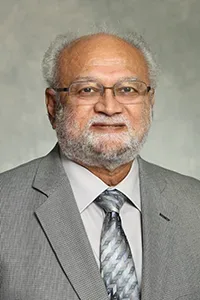
Vijay Raghavan
Faculty Co-Lead — Computing
University of Louisiana at Lafayette


Funding & Support
TSR research has been supported by the National Institutes of Health (NIH), National Institute of General Medical Sciences (NIGMS), and the Louisiana Board of Regents Support Fund. These awards support the development and application of computational methods for studying biomolecular 3D structures and molecular interactions.
Large-scale computational studies are also supported by high-performance computing resources provided by the Louisiana Optical Network Infrastructure (LONI).
Funding details & acknowledgments
NIH / National Institute of General Medical Sciences
- Wu Xu2R15GM144944-02
- Wu Xu1R15GM144944-01
Louisiana Board of Regents Support Fund
- Wu Xu and Vijay RaghavanLEQSF(2023-24)-RD-D-05
- Wu Xu and Vijay RaghavanLEQSF(2015-18)-RD-B-06
Computational Support
We gratefully acknowledge the high-performance computing resources provided by the Louisiana Optical Network Infrastructure (LONI) and the support of its technical team, including Feng Chen, Siva Kasetti, Jianxiong Li, Oleg Starovoytov, and Le Yan. We also thank Thaliyah Mason for her assistance in preparing datasets.
Working with us
We welcome questions about the method, about using BioTSR on your own structures, and about research collaboration. Problems with the software are best reported as issues on the relevant repository.